![]() |
| Long Distance, A. M. DODGE, INC bottle find. |
This bottle is embossed Long Distance on the shoulder, and on the heal, A. M. DODGE, INC.
Featuring mostly glass bottles but also ceramics and other miscellaneous items
![]() |
| Long Distance, A. M. DODGE, INC bottle find. |
| Embosded; HINDS HONEY AND ALMOND CREAM. A S HINDS CO. PORTLAND MAINE USA. |
Here is one of many ads for Hinds Honey and Almond Cream lotion. You can find them by using the link below. It was advertised for sunburn, younger skin, etc.
The family business was the A. S. Hinds Co. in Portland which was famous for various creams for the face, hands, and Skin. The A.S. Hinds company was started in 1875. They were bought out in 1907 by Lehn & Fink, maker of Lysol. The honey almond cream product was still available in 1948.
Hinds Honey and Almond Cream was formulated and marketed by Aurelius Stone Hinds in Portland Maine. He moved to Portland in 1862 and worked in a drugstore, which he bought in 1870. He worked on the formulation of the cream for a number of years, and began selling it from the drugstore probably sometime in the latter part of the 1870's. It was such a huge success that he soon had to put it into commercial production, first in Portland, and at some point distribution was shifted to a company in New Jersey. A number of different bottles from the very early days of the product are commonly found, but unfortunately, they do not carry a date...
Friends Of Hinds - A.S. Hinds Company
| Same Bottle Shown Above. |
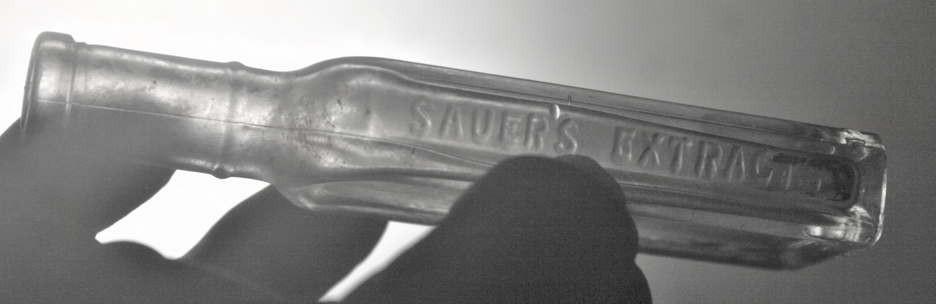
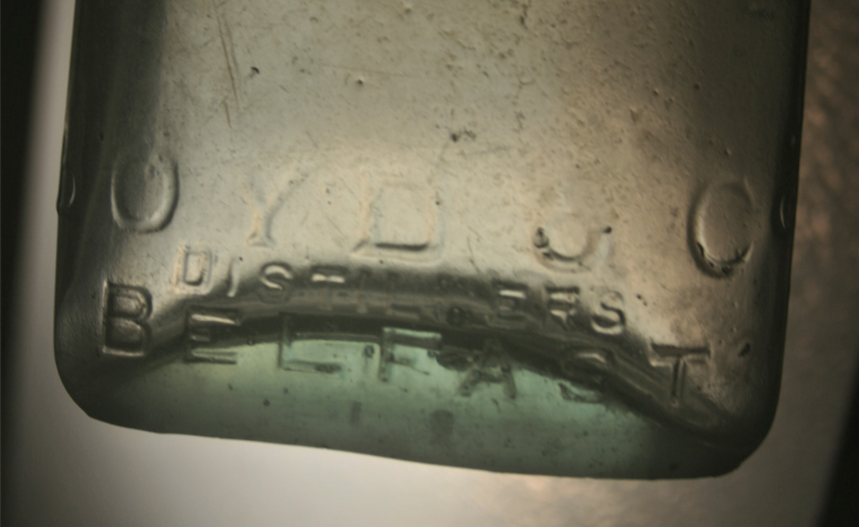
| Sauer's Extract Bottle. |
| Embossing on Sauer's Extract Bottle. |
| Sauer's Extract Bottle. Source: See gjenwick.com link below. |
Sauer's Extract | Vintage Ads (gjenvick.com)
And here is a link for a timeline on the company.
Sauer Brands History: Founding, Timeline, and Milestones (zippia.com)
By the way, the Sauer's company is another Richmond, Virginia company. As I've mentioned, a lot of the early 20th century bottles I've found around the Treasure Coast come from the East Coast of the U.S. Not surprising.
![]() |
| Here is a Treasure Coast Bottle Find: Piso's Consumption Cure. Top photo embossing: TRADE PISO'S MARK. Bottom photo embossing: PISO CO. WARREN PA. U. S. A. |
Talbott’s original formula for Piso’s Cure included opium and possibly other morphine derivatives. But the immediate post-Civil War era brought a revulsion against those drugs as many returning veterans had developed addictions to them as a result of treatment for their wounds. Although Congress only later outlawed opium-derived ingredients in patent medicines, the Trio saw the ban coming and by 1872, according to company literature, eliminated opium and morphine from Piso’s ingredients. They later won a lawsuit on that score. The medicine still contained cannabis (marijuana), chloroform, and alcohol, but Piso’s label did not mention them.
Below is a trade card image advertising Piso's cure for consumption and catarrh.
Whether it was the effects of the Great Depression or the 1937 passage of the Marijuana Tax Act, effectively barring cannabis in medicine, Piso’s corporate life ended before World War II...
Here is a link with much more information on the Piso company and its medicines.
BandE_Pages_1-24.pmd (fohbc.org)
The bottom reads, "THIS CUP HOLDS A HEAPING DESSERT SPOONFUL." Around the rim are heavily embossed numbers - 1 thorugh 12.
The cup is in good condition but was a bit puzzling. A little research soon gave me the answer.
It is the top of the John Wyeth and Brothers Effervescent Sodium Phosphate bottle shown below.
The bottom of the bottle is marked, "PAT MAY 16 1899."
I've seen many examples of the cup for sale for a few dollars - usually around five or six dollars.
The patent date suggests that the bottle is probably from the early 20th century.
Below is the link to the web site that provided the above picture.
http://www.bottlebooks.com/questions/august2001/august%202001%20questions.htm
Complete examples of this bottle type with this same embossing are from John Wyeth & Bro. and the bottle rim would have had a dose glass resting on it and the bottle said “TAKE NEXT DOSE AT” and then a mark so the dose glass can be rotated to the hour marked at its base.
This type of bottle was patented in 1899. Only the older bottles from this manufacturer are blue but it is not known when this bottle color was phased out. These bottles were handblown until 1910 which is also around the estimated time when the deep cobalt blue was discontinued.
| Embossed HENRY K WAMPOLE and CO., PHILADELPHIA Bottle. |
The contents of this bottle was cod liver oil with other substances, including alcohol and wild cherry extract.
This Treasure Coast bottle is in great shape. I'd guess it to be from the 1920s, but haven't confirmed that yet. You can see a couple nice elongated bubbles in the photo.
The Henry K. Wampole Co. started in the 1870s but continues until today.
A New York Times article of 1906 reads as follows.
"The body of H. K. Wampole, head of the firm of Henry K. Wampole & Co., of Philadelphia, was found floating in the North River off Weehawken on Friday, September 14...
There were two partners in the business, a Mr. Koch and a Mr. Campbell. Wampole's death was thought to be suicide but there were various charges of theft and misuse of company money that can be found online.| Wampole Ad Listing Pierson Drug Store of Pierson, Florida. |
| Half-Pint Embossed Miami Biltmore Dairy Bottle. |
| Electric Bug Kill Bottle Find. |
| Hexagonal Aqua PEPTO-MANGAN (GUDE) Bottle. |
Embossed PEPTO-MANGAN (GUDE), CONTENTS 11 FLUID OUNCES.
This is an attractive hexagonal aqua bottle.
Pepto-Mangan was manufactured in Liebzig by Dr. A Gude & Company and as early as 1892, Max J Breitenbach, a pharmacist by trade, served as Gude’s sole agent in both the United States and Canada.
It appears that the bottle was mostly covered, perhaps five of six sides, by a paper label containing a lot of text.
The company did a huge amount of advertising. Below are just a couple ads.
| Tropical Canners Bottle. |
Embossed: Tropical, TF (in diamond), CANNERS.
Concerning a similar Tropical CANNERS bottle on antiquebottles.net, I found the following information provided by jarsnstuff.
Made ca. 1930's-1947 by Florida Glass Co., Jacksonville and 1950-1954 by Tropical Glass & Box Co. also of Jacksonville. Some jars have a ghosted FG on the base, apparently for Florida Glass.
Here is the link.
There is also TF in a triangle
| Two Round Bottom Bottles. |
Here are two Treasure Coast finds. Notice the bottoms. I wouldn't call them torpedo bottles - just Chianti wine bottles.
Both of these have nice big bubbles in the glass, indicating they were blown rather than machine made. The smaller one has a seam that runs all the way to the applied top, while the larger one has no seam at all.
I'm now thinking that the one with no seams as well as the "olive oil" bottle I recently showed without seams were made with the use of a turn-mold, which SHA says is not so much a mold as a process. That process would not leave any seams.
On the smaller one you can see marks from when the lip was applied.
| Applied Lip. |
This one has a thick seam and what appears to be an accidental gauge or maybe a slightly damaged mold. On a coin, it would be a mint error. You can often find interesting little marks on bottles, especially blown bottles.
I don't know how old they are.
There is an O in a square on the bottom of the bottle. That mark was used by Owens Bottle Co., 1919 - 1929.
That information was found on the SHA maker's marks web page, which is a great site.
---
| Embossed Benn-Hubb Peanut Butter Jar. |
Here is a different kind of bottle find. It is profusely embossed as follows.
PENN-HUBB.
PEANUT BUTTER
MADE WITH PEANUTS AND SALT
NET WT. 1 LB.
BENNETT HUBBARD
CANDY COMPANY
CHATTANOOGA, TENN.
UNION MADE
There is also a grid embossed all the way around the jar.
Sanford Bennett and Stephen Hubbard were veterans of the confectionery industry by the time that they formed Bennett-Hubbard Candy. Mr. Bennett had been a partner with Albert Aull in a bakery/candy wholesale operation on Carter Street. Mr. Hubbard had moved to Chattanooga in 1893 from Chicago, where he had been employed by a large candy manufacturer. He had worked at other sweets factories in Chattanooga, including one at 7th and Market which also housed a saloon, and was a supervisor at the Brock Candy Company. Arthur Lazenby joined Bennett-Hubbard as its city sales manager, and had previously worked with Mr. Hubbard.
Bennett-Hubbard operated in a building on Eleventh Street which was next door to the Shubert Theater, later known as the Albert Theater. Their first candy was produced on March 18, 1919. In addition to hard candy and chocolates, the firm made chocolate marshmallows and peanut butter. Occasionally, the decorative peanut butter jars of Bennett-Hubbard are found at antique malls and shows. Bennett-Hubbard’s business increased during the 1920’s, and distributed its products throughout the South, Southwest, and Midwest. In those years, most candy was sold around Christmas, and candy manufacturers would have layoffs after the holidays. An advertisement for Bennett-Hubbard during the Christmas shopping season of 1928 read, “For unexpected guests! Candy about the house solves the problem of refreshments when guests arrive.”...
While Bennett-Hubbard prospered during the Great Depression, World War II presented a different set of challenges. During the war, the government rationed sugar, and candy manufacturers were each given a quota. However, if a business acquired another, it received that company’s allotment. On March 11, 1943, it was announced that the 100-employee Bennett-Hubbard Candy Company would be sold to the Topps Chewing Gum Company – the baseball card people - of New York. Topps had only been in business since 1938, but had begun buying out smaller companies for their sugar quotas starting in 1942. In acquiring Bennett-Hubbard, Topps envisioned expanding their business into the South...
Here is the link.
What Did That Building Used To Be? Bennett-Hubbard Candy - Chattanoogan.com
![]() |
| Embossed Frank Fehr Brewing Company Bottle. |
Embossed: FRANK FEHR BREWING CO, LOUISVILLE KY.
Frank Fehr Brewing Co. opened in 1890 and closed in 1901 it was open for 11 years. Items from breweries of this age tend to be more common and less valuable than some breweries. Early items can still be valuable as can rarer types of items. As a Pre-Prohibition Brewery, any advertising items or collectibles are likely to be valuable and desirable to collectors as they tend to be hard to find. Frank Fehr Brewing Co. was in an active brewing city. Louisville, KY was listed as having 37 breweries, which is quite a few. Sometimes a large number of breweries can lead to an active collecting community that will be willing to pay more for breweriana items than other collectors.
Source: Frank Fehr Brewing Co. – KY 36d | Old Breweries Information | Breweriana Values
| Embossed S B and C (or G) Co. |
| INNISBAWN WHISKEY Bottle. |
I'm trying to go through my bottle finds, get them researched and posted. I just got started on that, and I haven't learned anything about the history of the company yet. With the amount of information on the bottle, it shouldn't be difficult.
If you can find some history on the M. N. Porter and Co., it would be much appreciated.
![]() |
| Found Mexican Mustang Liniment Bottles |
http://www.peachridgeglass.com/2012/02/mexican-mustang-linament/
| Embossed BEAUFONT Trade Mark Registered Bottle |
This is a mystery bottle. I've seen it described as a beer bottle and a soda bottle. I haven't been able to positiveley identify it, though, From what I've read, it could be a soda water bottle.
![]() |
| BEAUFONT COMPANY INC., RICHMOND VA |
Source: A Sign of Pleasure - richmondmagazine.com
If you have additional information on the bottle, I'd be pleased to receive it.
![]() |
| Embossed Consumers Brewing Co. Bottle. |
Consumers Brewing Co. opened in 1890 and closed in 1902 it was open for 12 years. Items from breweries of this age tend to be more common and less valuable than some breweries. Early items can still be valuable as can rarer types of items. As a Pre-Prohibition Brewery, any advertising items or collectibles are likely to be valuable and desirable to collectors as they tend to be hard to find. Our information indicates that Consumers Brewing Co. was the only brewery that was located in Rosslyn, VA sometimes this means that items from a brewery will have extra value in the area it comes from because there are not other sources for local breweriana.
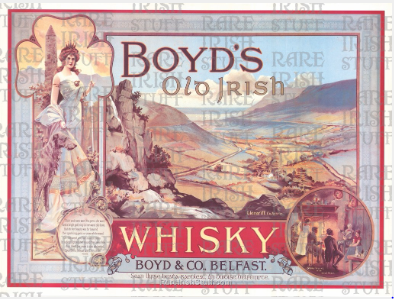
Source: Consumers Brewing Co. – VA 21a | Old Breweries Information | Brewer Iana Values
| Another View of the Same Consumers Brewing Co. Bottle From Rosslyn, Va. |
---
This bottle measures about 8.5 inches tall, and has a bottom diameter of about two inches.
I have six of these bottles. The one shown here has nearly clear glass. The others are more green and opaque. All were found between Stuart and Fort Pierce, Florida.
![]() |
| STUART BOTTLING WORKS embossing. |
Here is some history on the Stuart Bottling Works.
In July 1913, James Elersly Weir, Jr., purchased a pitch pine wooden building owned by Joseph A. Lucas, a real estate developer, located on an isolated dirt road (Decker Street) south of Stuart; he had it converted into a bottling plant, Stuart Bottle Works. Soft drinks were bottled, sealed with large snap off caps and distributed in Stuart, Palm City, Jensen, Salerno, Hobe Sound, even to Fort Pierce and Jupiter. Weir only remained in Stuart a few years, joining family in West Palm Beach, in the plastering business and later, an auction house.
The bottling plant building was eventually owned by Ira L. Decker, who operated a concrete manufacturing business and was used primarily for storage. In the afternoon of Feb. 6, 1933, while Decker and local firemen were battling a brush fire nearby, the building caught fire. The wooden structure quickly went up in flames making it impossible for Ira to retrieve equipment, vehicles or machinery.
At least two bottles from the plant survive, clearly marked Stuart Bottling Works, one of which can be seen at the Stuart Heritage Museum...
| J. R. Watkins Co. Bottle. Probably 1920s or 1930s |
The J. R. Watkins Company began in 1868 as a small home-based business in Plainview, Minnesota, founded by entrepreneur Joseph Ray Watkins.
Watkins distributed many different types of household products including cleaning products, food extracts and flavorings, cosmetics, home remedies, and other products. (They did not actually make the bottles in which these products were contained.) As business increased, in 1885 the company operations were moved from Plainview to Winona, Minnesota.
The very first bottles sold are assumed to date as far back as 1868, but I doubt that the very earliest containers were actually embossed with the “Watkins” name, but would have likely been “generic” hand blown bottles with a paper label affixed to indicate contents. (If anyone has more information on this, please contact me!)
By the very early 1870s, as business continued to expand, it is likely that bottles were being embossed with Watkins or “J. R. Watkins Co.” The earliest versions of the Watkins bottles were made in aqua glass, were handmade (with a tooled lip) and have the lip fashioned for a cork closure. Later versions (I don’t know the exact year, but probably by the 1920s or early 1930s) have a threaded-style lip for a screw-on lid.
There are probably hundreds of slightly different Watkins bottle mold variants in existence that have been used over the last 140 years, with a variety of differences in font style, exact wording arrangement, size and shape of the bottle, and I imagine it would be a monumental task to find just one example of every single one of them.

Many of the bottles from the 1920s-1940s are quite common, and are usually in clear glass and rectangular in shape. Sometimes the embossed company name is in a cursive font, and sometimes in a plain “block style lettering”. White milkglass salve or “ointment jars” were also sold.
Here is the link.Figural Bottle Find. I thought this was one of the best bottles I ever found. It seems to be painted pottery and has a nice seal on the b...